|
Cuts in Global HIV Funding Could Reverse Decades of Progress
Statistical models forcasting surges in HIV are a call to action to preserve hard-earned gains, researchers say.
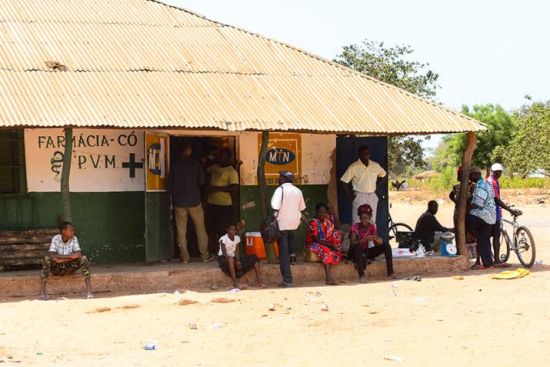
People wait outside a pharmacy in Guinea Bissau, one of more than 50 countries that rely on funding from the U.S. President's Emergency Plan for AIDS Relief (PEPFAR) to support HIV treatment. Photo credit: iStock.com
By Michael Penn
Published September 11, 2025 under Research News.
If significant actions are not taken to offset the massive cuts in funding for global HIV programs, decades of progress to prevent HIV-related deaths and illnesses could be lost in a matter of months, according to a new study led by Duke global health researchers.
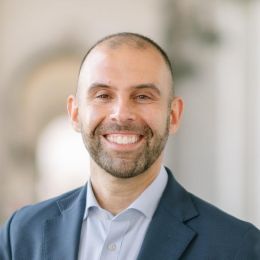 Jirair Ratevosian, Hock Fellow Jirair Ratevosian, Hock Fellow
The stark warning comes from an evaluation of nine statistical models assessing the impacts of funding cuts to global HIV prevention and treatment programs. A consensus of the models predicts that, as a result of current and proposed cuts to HIV funding in the U.S. and elsewhere, an additional 10 million people will become infected with HIV over the next five years, and an estimated 3 million more people will die from HIV-related diseases, according to the review, which appears in the September 2025 issue of Current Opinions in HIV and AIDS.
“These models show that even partial reductions in external HIV funding pose the risk of reversing decades of progress,” says Jirair Ratevosian, Dr.P.H., The Hock Postdoctoral Research Fellow at the Duke Global Health Institute, who helped lead the review. “It’s important to view them not just as predictions, but as a call to action to prevent the unraveling of those hard-earned gains.”
Mortality from HIV has declined steadily over the past two decades, from a peak of 2.1 million deaths in 2004 to about 630,000 in 2024. Programs such as the U.S.-funded President’s Emergency Plan for AIDS Relief (PEPFAR) have been a major factor in the decline by expanding access to antiretroviral therapy (ART) in low- and middle-income countries. Around 20 million people in 50 countries receive ARTs through PEPFAR programs.
“If we fail to invest in careful handoffs, we risk dismantling the health systems, supply chains and workforce that have been the backbone of HIV progress for two decades.“
Jirair Ratevosian, Dr.P.H. — DGHI Postdoctoral Research Fellow
Deep cuts to U.S. foreign aid programs, which have accounted for nearly three quarters of external support for global HIV prevention and treatment efforts, have raised doubts about sustaining that progress. HIV clinics in many countries have been severely disrupted by freezes to PEPFAR programs and dismantling of the U.S. Agency for International Development (USAID), which provided operational support for many HIV programs.
Few countries have the resources to compensate for the abrupt departure of external support, and some of the worst predicted health impacts are in poor countries that have been highly dependent on PEPFAR aid. One statistical model in South Africa, for example, projects that disruptions in HIV prevention, diagnosis and treatment will lead to infection and mortality rates not seen since the early 2000s, when the country was battling a crippling epidemic.
Such dire predictions should be a wake-up call for policymakers and implementers, says Ratevosian, who served as PEPFAR’s chief of staff from 2022-23.“PEPFAR is one of the great American success stories, and there is still time to turn this around. But it will require deliberate, well-sequenced transition plans that are fully financed and co-designed with governments and communities,” he says. “If we fail to invest in careful handoffs, we risk dismantling the health systems, supply chains and workforce that have been the backbone of HIV progress for two decades.”
In February, Ratevosian led a group of Duke public and global health researchers who proposed a plan to improve PEPFAR’s operational efficiency and accelerate transitions to local financing of HIV programs. A more measured handoff would allow countries time to ramp up domestic funding and avoid interruptions in service that could trigger surges in HIV infections, he says. The group also urged targeted investments in prevention, highlighting the adoption of long-acting HIV prevention options and the use of artificial intelligence to drive greater efficiency and impact across the global response.
“The world has already fallen behind the targets to end AIDS as a public health threat,” says Duke Global Health Institute director Chris Beyrer, M.D., who has spent more than three decades on the frontlines of HIV prevention and treatment globally. “It will take more resources, more coordination and stronger global partnerships to get back on course. Without urgent action, we risk watching the progress of the last two decades evaporate.”
Behind every data point is a mother in Tanzania or a child in Guatemala whose survival depends on programs now at risk.
Paul Ngangula, MS-GH'25
For the modeling research, Ratevosian collaborated with Khai Tram, M.D., an infectious diseases epidemiologist with the University of Washington, and Paul Ngangula, a 2025 graduate of the DGHI Master of Science in Global Health program, to analyze and synthesize nine models of HIV trends that were published between January and May 2025. While the forecasts vary in their assumptions about the duration and scope of funding gaps, they consistently show devastating setbacks in the global fight against HIV.
The cuts are likely to disproportionately affect vulnerable populations, including children in low-income countries who may no longer benefit from programs to prevent mother-to-child HIV transmission. According to the study, 1 million more children will become infected with HIV globally over the next five years, and new infections among children in sub-Saharan Africa are projected to rise at twice the rate of the overall population.
Other marginalized groups will see increased risks, as well, according to the researchers. Because some of the U.S. funding cuts have targeted HIV prevention programs, including those that focus on high-risk populations such as men who have sex with men, female sex workers and people who inject drugs, new infections and deaths are expected to grow at much higher rates among those populations. One model in the study projects HIV cases to grow six times faster among these populations.
The researchers note, however, that relatively few statistical models have evaluated the impact of funding cuts on specific demographic groups, underscoring the need for more research to evaluate how new funding realities are likely to change the risks for already vulnerable populations – and, more importantly, what policymakers can do to protect them.
“Models alone are not enough. We need research that centers the voices of those most affected,” says Ngangula. “Qualitative and ethnographic studies can humanize the statistics, reminding us that behind every data point is a mother in Tanzania or a child in Guatemala whose survival depends on programs now at risk.”
Ngangula says the grim mortality numbers should be seen not s inevitable, but “as the human cost of inaction ,and the lives we can save if we choose differently."
Topics:
Countries:
|