Emergency Preparedness for People With HIV
Content From: HIV.gov • Published: September 24, 2025
Summary:
If you have HIV, you’ll want to avoid interruptions to your treatment even if a natural disaster or emergency happens. Since the U.S. Atlantic hurricane season runs through November 30, we’re here to remind you to make an emergency plan. Learn how you can stay prepared and what steps to take to stay in care.
Have you ever thought about how you’d keep up your HIV treatment regimen if a natural disaster strikes tomorrow? We’re here to help you stay prepared. Emergencies and natural disasters can be overwhelming and cause disruption to how you usually manage your medication. That’s why it’s critical to plan ahead to protect your health and peace of mind, especially if you live in an area at higher risk for natural disasters like hurricanes, tornadoes, or wildfires.
Follow our tips below to stay prepared before emergencies happen.
Talk to Your Health Care Provider
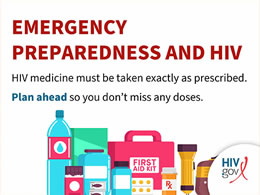
Your health care provider can recommend precautions you should take based on your history with HIV or other chronic diseases. Emergencies and natural disasters can disrupt how you usually manage your medication. HIV medicine must be taken exactly as prescribed, which requires many people to take HIV medicines daily. Interruptions to an HIV treatment regimen can greatly reduce the effectiveness of the medications and may lead to decreased immune function, increased vulnerability to opportunistic infections, and increased risk of HIV transmission. You might ask your provider questions about what to do if you lose your medication or miss a dose and how to access care if you need to evacuate to a location far from your provider. You can also ask if your state’s laws allow you to keep an extra prescription refill on hand in case of emergencies.
Stay Organized
It’s a great idea to prepare a list of the medications you take, including dosages and how often you take them. You can also plan ahead by keeping summaries of your HIV treatment history, a copy of your health insurance card, and contact information for your doctor and pharmacy. Store this information somewhere easily accessible so that you can grab it quickly if you need to evacuate your home or can access it later from another location. In the event of an evacuation, having this information will help you in case you need to see a different doctor temporarily or refill your prescription in another location. Find out if your provider has an electronic patient portal that you can log into to access your medical records and communicate with your provider. If so, consider creating an account so you have access in the event you are displaced temporarily.
Stay Alert
If you know an emergency might happen or is currently happening in your community, pay close attention to safety guidelines. Some disasters affect air or water quality, making people with HIV or other chronic conditions that weaken the immune system more likely to get sick. You can find emergency alerts and contacts for your state at the U.S. Department of Homeland Security’s State Homeland Security and Emergency Services page.
Plan Ahead
Bookmark some resources you might need during an emergency ahead of time, to avoid searching for information during a high stress moment. In addition to the State Homeland Security and Emergency Services page, here are a few more resources we recommend:
Disasters can hit at any time and often with little warning, but with these tips, you’ll be able to continue protecting your health. Find more information on our Emergencies and Disasters and HIV page.
HIV.gov
HIV.gov is the US Government’s gateway to federal HIV policies, programs, and resources to end the HIV epidemic. www.hiv.gov
Source: HIV.gov
https://www.hiv.gov/blog/emergency-preparedness-for-people-with-hiv
Back to ...
Positively Positive - Living with HIV/AIDS:
HIV/AIDS News
For more HIV and AIDS News visit...
Positively Positive - Living with HIV/AIDS: HIV/AIDS News Archive
|