Facing AIDS and Cancer: A Jersey Shore Reflection on Legacy and Connection
Key Takeaways
- Pre-ART HIV prognostication in the mid-1990s drove end-of-life planning, later overturned by rapidly evolving antiretroviral options that transformed survival expectations.
- Medical ineligibility for worldwide service effectively ended a Foreign Service career, underscoring how chronic immunocompromise can constrain occupational fitness and deployment policy.
- Stage III oral tongue cancer management involved major composite resection, nodal dissection, nerve-graft reconstruction, and adjuvant radiotherapy, resulting in dysphagia, weight loss, and PEG dependence.
- COVID-19 visitor restrictions amplified postoperative and radiation-associated morbidity by limiting bedside support, necessitating outpatient caregiving for tube feeds and daily functioning.
- Structured informal caregiver “teams,” including logistical coordination and device improvisation for enteral nutrition, were pivotal to treatment tolerance, completion, and convalescence.
Diagnosed with both AIDS and cancer, a writer finds solace in the Cape May surf and the profound gift of a friend truly engaging with his life’s work.
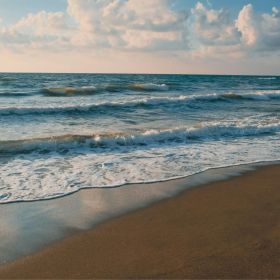 Diagnosed with both AIDS and cancer, a writer finds solace in the Cape May surf and the profound gift of a friend truly engaging with his life’s work
.
In 1995, doctors told me I would probably be dead of AIDS by April 1997. I had retired early from the U.S. Foreign Service, and patients with AIDS were dying rapidly. There was no effective treatment for AIDS or HIV. It was a grim time, and I had no reason to think I would be any different than the hordes of patients who had already succumbed, who were deprived of a normal life span and the opportunity to grow old.
I imagined some fairy-tale scene where my friends would gather around my deathbed as I took my last breath. I told my friends to come to visit “before it was too late.” I pressed them to understand the urgency of my situation and said I needed their support in my final months.
In Cape May, New Jersey, I could walk the beach before my afternoon naps. Looking out at the Atlantic Ocean, I felt I was in touch with global rhythms as the waves rolled in and ebbed out. Just like them, I thought, our lives are a slow progression of entering and leaving. A timeless cycle. The natural order was cascading before my eyes.
I was sad, but I felt I’d had a good run in my 39 years. I knew many patients with AIDS who had not even seen their 30th birthdays, so I had been graced with extra time. But as my organs began to fail and my fatigue mounted, I told my friends to hurry. I wasn’t sure how much longer I would be able to walk the beach with them. I could foresee a future when I never left my bed.
One friend asked if she could read my writings during her week with me. She made her way chronologically through my work — two of my plays had been produced, and I had published a few short stories, but five plays and a novel had never been published. When I rose from my nap, she asked me about them: Why did this character throw boiling water at the postman? Why did that character want a window opened as he died? I enjoyed explaining their motivations: Here was somebody paying attention.
I wanted more of my friends to show such attention, but they were busy with their lives. I was disappointed but thought it was best not to obsess over it. Just let it go. Who came, came. Who didn’t, didn’t.
Then the miraculous happened. New drugs became available. Suddenly I could imagine living beyond 1997. Maybe even make it to 2000. How fantastic that would be!
I looked into returning to the Foreign Service, although I suspected the State Department would balk. Diplomats must be available worldwide, and with my compromised immune system and the substandard health care in many nations, the bureaucracy was not likely to want to post me overseas. When the medical division said it was not reversing disability retirements for HIV-positive former officers, I knew my Foreign Service chapter was over.
Despite my infection, I became a caregiver for various family members as they struggled with debilitating health challenges of their own. I wound up burying both my parents, a brother and a sister. In time I became an orphaned senior, family-less. My friends would have to become my new “chosen” family, and many of them shied away from assuming a greater role in my pilgrimage. Some thought I had already asked too much of them.
One morning in 2020, I woke up and could not swallow. A biopsy confirmed stage 3 cancer of the tongue and lymph nodes. I endured a brutal surgery that removed more than half of my tongue along with 31 lymph nodes. Nerves from my arm were sewn together to reconstruct a new tongue. COVID-19 restrictions barred visitors from the hospital. Subsequently, I underwent 33 targeted radiation treatments, which left me with impaired speech and sense of taste, burning sores in my mouth and the inability to swallow any food that required chewing.
Doctors inserted a feeding tube in my stomach because I could not get adequate nutrition by mouth. It was a hard time, and again I begged my friends to visit. Not so much as a deathwatch but for support. I needed help getting nutrition into the feeding tube. My weight had gone from a plump 204 pounds to a skeletal 135.
What my friends did next still astonishes me. They organized a schedule of caregiving that included people I love from almost every chapter of my life — high school, college, the Peace Corps, graduate school and the Foreign Service. Many of them didn’t know each other, but that didn’t stop them from creating a text group that could plan a blanketing schedule. One friend even built a device so nutrition could be more easily delivered to my feeding tube. These friends are the reason I made it through radiation and am recovering.
This time around, my call for help was not about my attention-seeking ego but was rather a humble request to help me stick around for a while. I am now 70 years old. I have enjoyed many bonus years after my HIV infection when my story could have ended so early.
Despite the hurdles, I feel blessed just to wake up and walk around my neighborhood, to marvel at a family of brown ducks traversing my street. A butterfly floats among the pink impatiens on my patio. Yes, I’m on a hard road. But I am still here to marvel at the music of waves crashing to the shore.
Michael Varga is a retired diplomat and fiction writer whose essays have appeared in many newspapers. His Peace Corps novel, “Under Chad’s Spell,” is available at Amazon. To read more of his work, visit www.michaelvarga.com.
This piece reflects the author’s personal experience and perspective. For medical advice, please consult your health care provider.
Contact:
Kim Scaffidi
Sr. Director, Contracts
o: 732-346-3056
kscaffidi@mjhlifesciences.com
Source: Cure
https://www.curetoday.com/view/facing-aids-and-cancer-a-jersey-shore-reflection-on-legacy-and-connection
"Reproduced with permission - Cure"
Cure
Back to…
Positively Positive - Living with HIV/AIDS:
HIV/AIDS News
For more HIV and AIDS News visit…
Positively Positive - Living with HIV/AIDS: HIV/AIDS News Archive
|