|
Abstract
Background
While life expectancy has significantly increased among people living with HIV (PLWH) due to effective antiretroviral therapy, aging-related non-communicable diseases and multimorbidity have emerged as critical challenges. Understanding the evolving health needs of PLWH is essential to guiding healthcare planning and interventions.
Methods
We developed a new microsimulation model that integrates longitudinal clinical and administrative data to project the health trajectories of PLWH in British Columbia from 2019 to 2034. High prevalence conditions, such as cardiovascular disease (CVD), non-AIDS-related cancers, chronic liver disease (CLD), hypertension, chronic obstructive pulmonary disease (COPD), and mood and anxiety disorders (MANX), were included in the model. Results were stratified by age and sex.
Results
Here we show that by 2034, nearly half of PLWH will be aged 60 years or older, and more than one-quarter will live with at least three additional chronic conditions. CVD is projected to nearly double (8.4–14.8%), cancers to rise from 8.9 to 17.2%, while MANX will remain the most common comorbidity, affecting about half of PLWH. Sex differences are pronounced; females show higher rates of multimorbidity involving MANX, CLD, and COPD, whereas males show higher prevalence of non-AIDS-related cancers and CVD.
Conclusions
These findings highlight the urgency of preparing for a sharp increase in multimorbidity and demonstrate the value of forecasting tools to guide integrated models of care for aging PLWH.
Introduction
As in many high-income settings, British Columbia (BC), Canada is experiencing a demographic shift among people living with HIV (PLWH). In BC, the median age of PLWH has increased dramatically mainly due to the success of antiretroviral therapy (ART), from 38 (25th–75th percentiles: 33–44) years in 1996 to 55 (44–63) years in 2023. Consequently, the prevalence of age-related non-communicable diseases (NCDs) has increased during this period, with 16% of PLWH aged 50 years or older now living with at least two NCDs (24% among those 60 years and older), with metabolic, cardiovascular and lung diseases, and non-AIDS related cancers representing the highest burden of illness1. Studies have demonstrated that PLWH, in comparison to those without HIV, consistently experience a higher number of comorbid NCDs at an earlier age, and in some studies, onset occurs at least 12 years earlier2. Additionally, premature mortality from non-HIV/AIDS related causes are on the rise, representing 92% of all deaths among PLWH in 20223.
It is well established that as individuals age, their immune system experiences senescence, which can be exacerbated by HIV infection which causes immunological damage and chronic inflammation4,5. Whether HIV infection is accelerating the onset of NCDs is yet to be shown, but clinical progression of these diseases can be attributed, in part, to the syndemic effect of psychosocial factors (e.g., social support and/or isolation), structural factors (e.g., access to healthcare resources, housing, food, and medications), behavioral factors (e.g., unregulated drug, alcohol, and/or tobacco use), and the cumulative toxicity of HIV/non-HIV medications. In addition, older PLWH are increasingly suffering from mental health issues, which may be associated with cognitive impairment, which in turn may impair their ability to adhere to complex treatment regimens needed to optimally treat both HIV and NCDs. This is further compounded by the paucity of services and programs specifically designed to support older PLWH.
Older PLWH are a highly heterogeneous subgroup6, reflecting differences in sex, stages of aging and an array of HIV-associated and aging-linked NCDs, which complicates their care7,8. Life expectancy for female PLWH aged 55 and older remained lower compared to their male counterparts, which makes female PLWH as a priority for care optimization9. Prioritizing on the basis of symptoms can lead to undermanaging serious asymptomatic cases with potentially devastating consequences7,10. Until a cure for HIV is found, there is an urgent need for new research on policy and program interventions to promote healthy aging among PLWH11,12. As such, empirical evidence is needed to direct resources and care appropriately for this population, and inform new interventions and programs to address the needs of PLWH. Knowledge of the impact of NCDs on HIV treatment response and the use of healthcare resources is lacking in an aging PLWH population13. Dynamic modeling of disease and outcome trends has been widely used to forecasting future healthcare needs of PLWH and assessing the impact of multiple interventions, especially when dealing with complex data from multiple, varied sources14.
Individual-based microsimulation models have been extensively used to predict NCDs among PLWH in different settings. However, previous studies either focused on one specific NCD or did not incorporate mental health factors15,16,17. Althoff et al. predicted trends in mental and physical NCDs as well as multimorbidity among PLWH in the United States stratified by race/ethnicity, sex and HIV exposure category18. However, specific patterns of multimorbidity for improvement of healthcare delivery were not identified.
Therefore, in this study our aim was to develop a dynamic microsimulation model of HIV disease progression that incorporates incidence and prevalence trends of NCDs (and key determinants of health) as they change over time. We will use this model to forecast the impact of HIV and non-HIV prevention and treatment policies and interventions on health outcomes at the population level. The appeal of employing this modeling approach is that it can enable decision makers to make empirically-informed choices to: (1) identify different population segments as priority groups; (2) characterize which conditions are contributing most to the care/cost burden of NCDs in this population; (3) forecast health trajectories for key subgroups based on currently observed trends in determinants of health and NCDs; and (4) use counterfactual analysis to test the relative impact of different interventions with the aim of selecting the most effective combination of interventions for improving health outcomes and reducing the burden on the healthcare system.
Our study shows that by 2034, PLWH aged 60 and above will account for almost half of the population. In addition, the burden of comorbidities, especially cardiovascular disease (CVD) and non-AIDS-related cancers (henceforth referred to as cancers after excluding Kaposi sarcoma, non-Hodgkin’s lymphoma, and cervical cancer), will rise substantially, with more than a quarter living with at least three additional comorbidities. Our model also reveals different multimorbidity patterns by sex: females are disproportionally affected by mood and anxiety disorders (MANX), chronic liver disease (CLD), and chronic obstructive pulmonary disease (COPD), while males have a higher burden of CVD and cancers.
Methods
Model overview
To address the complex health trajectories of aging PLWH in BC, we developed an individual-based microsimulation model. This model captures the interactions between HIV disease progression, ART history, and the incidence of NCDs. By simulating individual life courses, the model forecasts the population-level impact of various health outcomes up to 2034.
Data sources
The data sources for this model included the provincial HIV Drug Treatment Program (DTP), which is a registry at the BC Centre for Excellence in HIV/AIDS (BC-CfE), and the Seek and Treat for Optimal Prevention of HIV/AIDS (STOP HIV/AIDS) cohort19,20. The DTP has provided universal ART at no cost to all medically eligible residents of BC since 1992 and, as such, provides historical clinical and therapeutic data on all persons with at least one viral load and/or ART dispensation in the province. The STOP HIV/AIDS cohort comprises all diagnosed PLWH in BC, which has been described at length previously21. In brief, these two linked data sources include detailed records on ART history and clinical markers for the vast majority of PLWH in BC, and additionally the STOP HIV/AIDS cohort includes administrative health data covering medical visits, hospitalizations, prescriptions, and mortality. Case-finding algorithms using International Classification of Diseases codes were applied to identify comorbidities in the linked datasets (details can be found in the Supplementary Information)22,23,24,25,26.
Model schematics
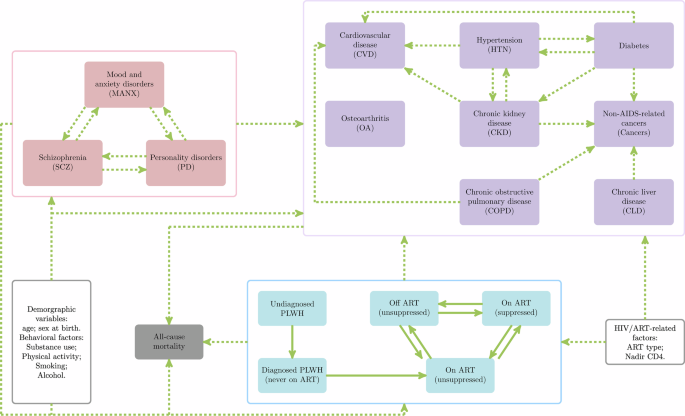
Figure 1 outlines the conceptual framework of the microsimulation model. The model captures HIV disease progression, ART history, and the development of age-related comorbidities. It integrates individual health trajectories with key determinants, including demographic, behavioral, and clinical factors, providing a robust foundation for forecasting health outcomes and evaluating policy interventions.
Population initialization
The model population was initialized to represent all individuals diagnosed with HIV and alive in BC as of January 1, 2008. The characteristics of each individual—including age, sex, HIV diagnosis date, ART history, CD4 count at baseline, and existing comorbidities—were extracted from the DTP and STOP HIV/AIDS cohort. New individuals were introduced into the model biannually, either through new diagnoses or migration into BC (Supplementary Figs. S1–S3).
Description of health states
The model included the following health states for individuals: (1) Aware but not on ART (i.e., HIV-diagnosed PLWH without ART initiation in BC); (2) On ART with unsuppressed viral load; (3) On ART with viral suppression; (4) Off ART with unsuppressed viral load.
Factors considered
The trajectory of each individual was simulated based on the following time-fixed or time-varying factors:
(1) demographic variables, such as age and sex at birth; (2) clinical markers, such as nadir CD4 count (<200 or ≥200 cells/mm3), viral suppression status, ART class (non-nucleoside reverse transcriptase inhibitors (NNRTIs), nucleoside reverse transcriptase inhibitors (nRTIs), protease inhibitors (PIs), and integrase strand transfer inhibitors (INSTIs)), year of HIV diagnosis and viral load suppression (<200 or ≥200 copies/mL); (3) prevalent physical and mental comorbidities: CVD, diabetes (mellitus), chronic kidney disease (CKD), CLD, COPD, hypertension (HTN), osteoarthritis (OA), cancers, MANX, schizophrenia (SCZ), and personality disorders (PD); (4) behavioral factors, such as drug-related substance use status (captured based on opioid use disorder or injection drug use), physical activity, smoking and alcohol use.
Disease progression and comorbidity development
The determination of state transitions for comorbidities was informed by a literature review and clinical assessments made by co-authors. Probabilities for health-state transitions and comorbidity development were modeled using different statistical methods as described in the Supplementary Information. The transition probability from one stage to another for each individual, accounting for heterogeneity at individual level, was updated every six months, based on different covariates as described in the Supplementary Information (Tables S1–S16).
Calibration and validation
Calibration was performed by fitting model outputs to historical data on ART initiation, comorbidity prevalence, and mortality from 2008 to 2016. Parameter sets were sampled using Latin Hypercube sampling method, which ensured that the sampled combinations provided balanced representation of the multidimensional parameter range27. The final parameter set was refined by minimizing the residual sum of squares between simulated and observed data. Model validation was achieved by comparing projections from 2017 to 2019 against real-world data, ensuring consistency with observed trends (Supplementary Figs. S4–S10). The same parameter set was used for model projection from 2020 to 2034. The results were summarized as medians (95% credible interval: 2.5th–97.5th percentiles) based on 1000 simulation runs.
Details on statistical analyses, parameter estimation, and additional modeling considerations are available in the Supplementary Information.
Ethics approval
This study received approval from the University of British Columbia Ethics Review Committee at St. Paul’s Hospital, Providence Health Care site (H18-02208). The use of administrative data was approved by data stewards. Due to the use of anonymized administrative data, informed consent was not required for this study.
Results
Population aging among diagnosed PLWH in BC
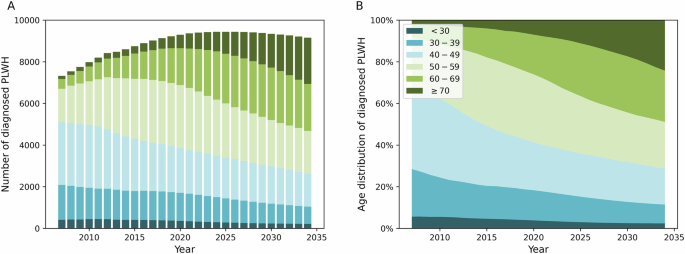
Our model estimated that the number of diagnosed PLWH in BC in 2022 was 9421 (2.5th–97.5th percentiles as 95% credible interval: 8787–9882), which was consistent with the estimation at 9691 from the BC-CfE, or at 8858 from the Public Health Agency of Canada28,29. The number of PLWH in BC is projected to peak at 9471 (8838–9920) in 2025, followed by a slight decline to 9182 (8630–9565) by 2034 (Fig. 2, Supplementary Tables S17 and S18). This trend is accompanied by a pronounced demographic shift toward older age groups. The proportion of PLWH aged ≥60 is expected to double, from 24.4% (23.4–25.5%) in 2019 to 48.9% (47.9–49.9%) in 2034, while those aged ≥70 will increase more than threefold, from 6.2% (5.7–6.7%) to 24.3% (23.3–25.1%). These results reflect the success of ART in extending life expectancy but underscore the growing complexity of managing aging-related health challenges in this population.
Comorbidity and multimorbidity burden over time
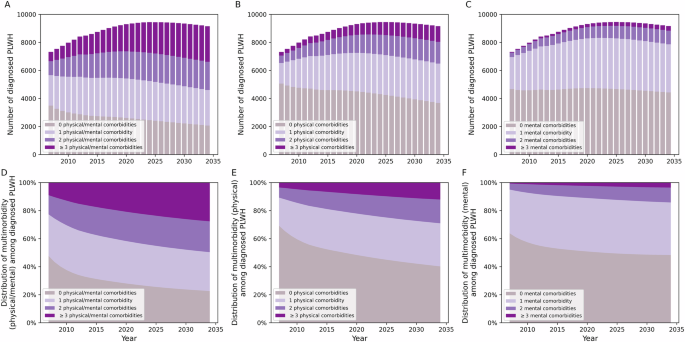
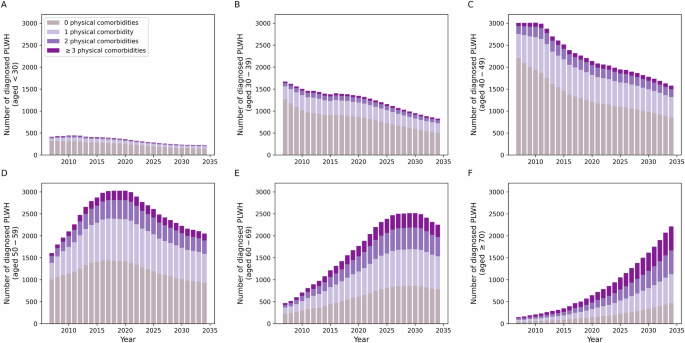
Aging among PLWH is paralleled by an increase in both the prevalence and complexity of physical and mental comorbidities. By 2034, the number of PLWH with at least three comorbidities (including both physical and mental conditions, in addition to HIV) will rise from 1860 (1736–1967) or 20.2% (19.4–21.1%) of the population in 2019 to 2535 (2369–2681), representing 27.7% (26.8–28.6%) of the population (Fig. 3 and Supplementary Tables S19–S21). While physical comorbidities dominate the overall burden, mental health conditions remain a significant and growing concern. The proportion of PLWH experiencing at least one mental health condition will increase from 48.8% (47.8–49.8%) in 2019 to 51.7% (50.6–52.6%) in 2034, reflecting the persistent need for mental health care within this population. The proportion of PLWH with at least two physical comorbidities will rise from 21.5% (20.6–22.4%) to 29.1% (28.1–30.1%) during this period, further emphasizing the need for coordinated healthcare delivery systems that can address these overlapping health challenges.
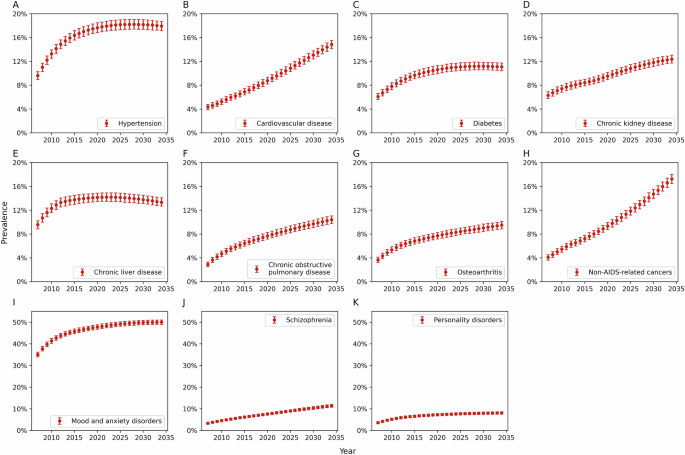
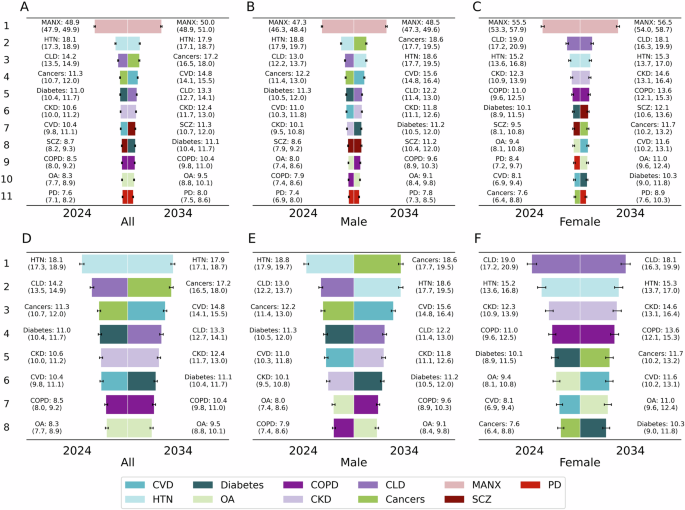
By 2034, the prevalence of NCDs among PLWH is projected to rise substantially (Fig. 4 and Supplementary Table S22). CVD prevalence is expected to nearly double, increasing from 8.4% (7.8–9.0%) in 2019 to 14.8% (14.1–15.5%) in 2034, and cancers will see a similar rise, from 8.9% (8.3–9.4%) to 17.2% (16.5–18.0%). CLD will decline slightly, from 14.1% (13.4–14.8%) in 2019 to 13.3% (12.7–14.1%) in 2034. MANX will remain the most prevalent mental health condition, affecting approximately half of all PLWH by 2034. Both SCZ and PD increase moderately between 2019 and 2034.
Age-specific comorbidity patterns
The burden of comorbidities (i.e., comorbidity prevalence) is disproportionately concentrated in older age groups among PLWH, with significant growth projected in the coming decades (Fig. 5, Supplementary Figs. S11 and S12, and Tables S23–S28). From 2019 to 2034, the number of individuals aged 60–69 with at least two comorbidities will increase from 546 (498–596) or 5.9% (5.4–6.5%) of the population to 721 (656–782), representing 7.9% (7.3–8.4%) of the population. Among those aged ≥70, an even sharper rise will be seen, from 275 (242–309) or 3.0% (2.6–3.4%) of the population to 1089 (1019–1164), representing 11.9% (11.2–12.7%) of the population. The dramatic rise in multimorbidity in the ≥70 group points to the cumulative impact of aging with HIV and long-term ART exposure. Conditions like CVD, cancers, and HTN are expected to dominate this age group. This aligns with the natural progression of aging but may also reflect accelerated aging processes in PLWH. In contrast, younger PLWH (<50 years) exhibit a relatively stable prevalence of comorbidities, likely reflecting early intervention with ART and lower cumulative risk exposures.
Sex-specific comorbidity patterns
Sex-based differences in comorbidity prevalence are pronounced, reflecting distinct patterns in health outcomes among male and female PLWH (Fig. 6 and Supplementary Fig. S13). COPD emerges as a significant comorbidity for older females, with prevalence reaching 13.6% (12.1–15.3%) by 2034, compared to only 9.6% (8.9–10.3%) among males, which might reflect the vulnerability of female PLWH due to substance use. CVD prevalence increases markedly among males, becoming the third most prevalent physical comorbidity by 2034 (up from fifth in 2024). Among females, however, CVD ranks lower, highlighting the need for tailored prevention strategies, including sex-specific cardiovascular risk assessments and management. Among males, the shift from HTN to cancers as the most prevalent physical comorbidity might reflect the growing impact of age-related malignancies in aging PLWH. Mental health conditions, particularly MANX, are more prevalent among females compared to males (56.5% [54.0–58.7%] vs. 48.5% [47.3–49.6%] in 2034), reflecting sex-specific differences in psychosocial stressors, structural barriers and behavioral factors which affect the development of comorbidities. CLD remains the most prevalent physical comorbidity among females, potentially linked to a higher prevalence of hepatitis co-infection or other behavioral and clinical factors.
Clustering and co-occurrence of comorbidities
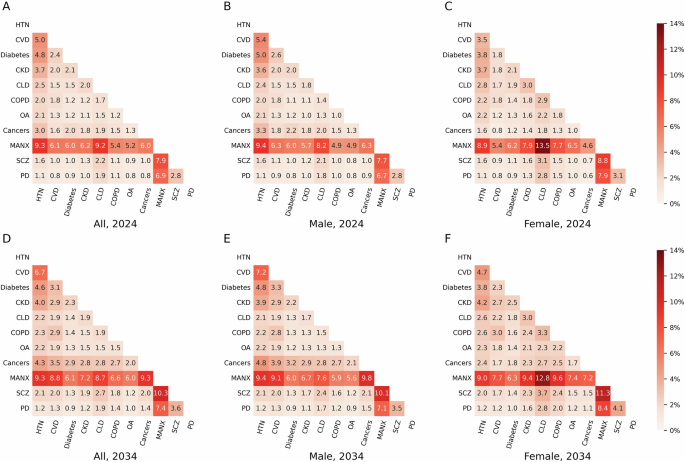
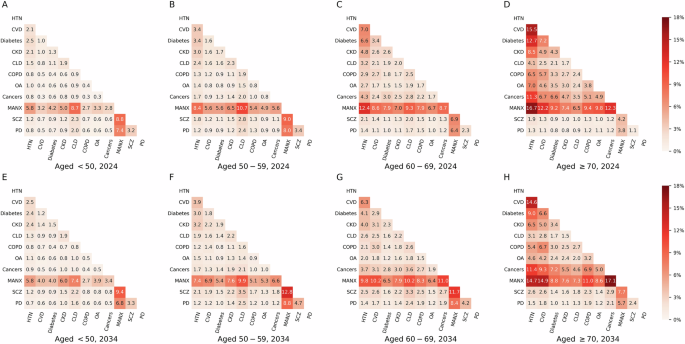
The increasing prevalence of comorbidities highlights the complexity of managing overlapping health conditions among PLWH (Fig. 7). By 2034, mental health conditions, particularly MANX, will frequently co-occur with physical diseases such as HTN, cancers, and CVD. The most common co-occurring comorbidity dyad (other than HIV) involve MANX and SCZ, MANX and cancers, and MANX and HTN. For example, the prevalence of PLWH with both MANX and cancers will grow from 6.0% (5.5–6.5%) in 2024 to 9.3% (8.8–10.0%) in 2034. Among females, besides SCZ, MANX frequently co-occurs with CLD and COPD, highlighting distinct disease clustering in this subgroup. Conversely, males are more likely to experience combinations involving MANX, cancers, HTN and CVD. Older age groups show a shift in the clustering of comorbidities (Fig. 8 and Supplementary Fig. S14). Among those aged ≥70, MANX and cancers become the dominant co-occurring comorbidity dyad, followed by MANX combined with HTN or CVD, whereas the dominant co-occurring comorbidity dyad for those aged <50 was MANX and SCZ. This shift reflects the cumulative impact of aging and long-term ART exposure.
Discussion
This study provides an in-depth analysis of the evolving health challenges faced by PLWH in BC as the population ages. By 2034, nearly half of PLWH will be aged ≥60, and approximately a quarter will be ≥70. This demographic shift is accompanied by a substantial rise in multimorbidity, with 27.7% of PLWH projected to have at least three additional diagnoses, including mental and physical health conditions. CVD and cancers are expected to see the largest increases, while CLD will slightly decline. MANX will remain highly prevalent, affecting approximately half of PLWH. Notably, older females disproportionately experience multimorbidity patterns involving MANX, CLD, and COPD, while older males exhibit higher prevalence of cancers and CVD. Unlike CVD, the prevalence of diabetes is projected to be stable by 2034, even though diabetes is associated with accelerated cardiovascular risk. In our model, while the development of CVD and diabetes shared the same risk factors such as HTN and MANX, there are divergent effects of the follow-up period, which indicates that diabetes is diagnosed earlier since the study baseline than CVD. These findings underscore the interplay between aging, sex-specific vulnerabilities, chronic inflammation, behavioral risks (e.g., smoking, alcohol, and unregulated substance use), and long-term ART exposure. For example, drug-related substance use, which is more prevalent among female PLWH in the STOP/HIV/AIDS cohort, is associated with the development of COPD, but not cancers (Supplementary Information).
The observed sex differences highlight distinct health challenges faced by male and female PLWH. Among females, the co-occurrence of MANX with CLD or COPD underscores a complex interaction of psychosocial stress, biological factors (e.g., hormonal changes, immune dysregulation), structural factors (e.g., access to primary care and preventive medications), and behavioral risks such as smoking, alcohol and injected drug use30,31,32,33,34,35,36. Hepatitis co-infection and systemic inflammation likely exacerbate these conditions37,38. Interventions for females should prioritize access to primary care, harm reduction programs, smoking cessation, liver health management, and mental health support to address these overlapping burdens. In contrast, males experience a higher prevalence of cancers and CVD, likely driven by longer ART exposure, metabolic syndrome, and lifestyle factors39,40,41,42,43. Prevention and management efforts should focus on lung, colorectal and anal cancer screening, as well as cardiovascular risk assessments, including management of HTN, dyslipidemia and diabetes. Comprehensive primary care access should be available to all PLWH with focus on primary prevention and psychosocial support services.
The rising burden of multimorbidity in older PLWH (≥60 years) reflects the cumulative effects of aging, chronic inflammation (or “inflammaging”), and long-term ART use44. Long-term ART exposure was shown to be associated with hypertension and dyslipidemia45. In addition, specific regimens in PIs and nRTIs, such as lopinavir and tenofovir disoproxil fumarate, were linked to renal stone formation and decline of renal function46. Conditions such as CVD, cancers, and diabetes highlight the accelerated aging experienced by PLWH, fueled by immune activation and oxidative stress47,48. In younger PLWH (<50 years), the relatively stable prevalence of comorbidities demonstrates the benefits of early ART initiation, sustained viral suppression, and access to newer ART with less metabolic and renal toxicities49,50,51. However, preventative efforts to promote healthy behaviors and mitigate long-term risks remain essential for this group.
The frequent clustering of MANX with physical conditions such as HTN, cancers, and CVD underscores the bidirectional relationship between mental and physical health. Chronic stress, depression, and anxiety exacerbate systemic inflammation, accelerating the progression of physical conditions, while physical comorbidities worsen mental health outcomes by increasing psychosocial stress and reducing quality of life52,53,54. Integrated care models addressing both mental and physical health simultaneously are critical to breaking this cycle and improving outcomes.
These projected trends demand strategic adaptations in healthcare systems and public health initiatives including but not limited to the following areas. Integrated care models which coordinated HIV care with mental health, geriatrics, and chronic disease care is urgently needed. Multidisciplinary teams led by primary care providers, possibly including HIV specialists, psychiatrists, cardiologists, and oncologists, should manage the complex health needs of aging PLWH. In addition, harm reduction programs for people who use drugs, treatment of opioid use disorder, and psychosocial support should also be accessible through the integrated care. It is critical to implement proactive screening for cancers, CVD, and mental health conditions, especially for older males and females with distinct disease patterns. Behavioral interventions such as smoking cessation, reduce alcohol use, and encourage physical activity are essential to mitigate key risk factors. Tailored sex- and gender-sensitive strategies should address the unique vulnerabilities of males (e.g., cancer prevention) and females (e.g., mental health and liver disease) to effectively reduce health disparities.
This study employs a dynamic microsimulation model that integrates HIV disease progression, ART, and the development of age-related comorbidities, offering a sophisticated framework for forecasting health outcomes. The model’s ability to capture sex-specific and age-specific trends provides valuable insights into the heterogeneous health needs of aging PLWH. The BC-CfE’s DTP and STOP HIV/AIDS cohort provides large-scale, longitudinal data for all diagnosed PLWH in BC, which ensures a representative sample and enhances the validity and relevance of the findings. Robust sensitivity analyses further reinforce the reliability of the projections, making the model a powerful tool for policy planning and intervention evaluation (Supplementary Fig. S15).
This study advances the field by providing a systematic and nuanced perspective on multimorbidity among PLWH. While previous models have often concentrated on individual comorbidities or overlooked mental health aspects, our approach captures the dynamic interplay between mental and physical health over time15,16,17. Notably, we identify sex-specific patterns, such as the clustering of MANX with CLD and COPD in females, and the association of cancers with CVD in males. These insights are seldom addressed in existing literature17,18. Furthermore, our focus on co-occurring comorbidity dyads enhances understanding of the complex care needs within this population, distinguishing our study from prior research.
For instance, a systematic review highlighted that women with HIV are more likely to report depressive symptoms compared to men, yet few studies have explored the underlying reasons for this disparity55. Additionally, research has indicated that women with HIV may experience a greater constellation of biopsychosocial factors, contributing to higher syndemic counts compared to men56. Our study builds upon these findings by integrating both mental and physical health comorbidities and examining their co-occurrence patterns, providing a more holistic understanding of the health challenges faced by PLWH.
Moreover, while previous studies have documented the rising prevalence of NCDs in PLWH, they often lacked detailed sex-specific or age-specific analyses17,18. Our findings expand on this by identifying distinct patterns of disease clustering, such as the higher prevalence of MANX and CLD in females and the predominance of cancers in males. Additionally, the incorporation of mental health conditions as both independent and co-occurring outcomes offers a more in-depth understanding of the health challenges faced by PLWH.
Our results are consistent with existing studies, including PEARL, CEPAC, ATHENA, and NA-ACCORD, which have also documented the increasing burden of multimorbidity among aging PLWH17,18,57,58. Similar to the PEARL and ATHENA models, our model projects significant rises in age-related comorbidities, such as CVD and cancers, as the PLWH population ages. Like CEPAC, our model emphasizes the importance of integrated care strategies, such as proactive screening and multidisciplinary management, to address the growing complexity of health needs in PLWH. Additionally, the inclusion of mental health conditions (e.g., MANX) in our analysis aligns with the PEARL model, which highlights the persistent prevalence of depression and anxiety. However, unlike these models, our work uniquely incorporates sex-specific analyses, identifying distinct multimorbidity patterns in males and females, such as the clustering of MANX with CLD and COPD in females, and the higher prevalence of cancers and CVD in males.
Despite its strengths, our model has some limitations. First, even though ART adherence and healthcare access are determined by baseline characteristics and time-varying mental health status, we did not consider potential disruptions or advancements in HIV care. Second, while behavioral factors such as smoking, alcohol, and drug-related substance use are considered, they are based on the distributions among the general population and are not dynamically modeled, which may underestimate their impact on disease trajectories, especially among female PLWH who are disproportionally affected by substance use59. Third, the model does not incorporate potential effects of emerging therapies that could change ART composition in the population and alter long-term outcomes. For example, the number of patients on newer ART regimens, such as tenofovir alafenamide (TAF) and bictegravir (BIC), started to increase in 2020, which is beyond the calibration period of the study60. The impact of TAF on dyslipidemia and the impact of TAF and BIC on weight gain could potentially exacerbate the burden of comorbidities, such as diabetes and CLD, among PLWH61,62,63,64. On the other hand, More BIC use with better lipid profiles and more TAF use with fewer renal toxicities could decrease the risk of dyslipidemia, obesity and renal disease19,50,51. Fourth, our model concentrates on key mental and physical comorbidities among PLWH. The incidence of substance use disorder and non-fatal overdose is not considered in our model since we focused on aging-related NCDs. Our model considers drug-related substance use and alcohol consumption as important risk factors for comorbidities such as CLD (Supplementary Information). Even though drug toxicity deaths are not separated from all-cause mortality in the model, the impact of drug toxicity is measured indirectly from the elevated risk of mortality due to drug-related substance use, as the ongoing drug toxicity crisis disproportionally affects PLWH65. In Fifth, the comorbidities were identified by implementing case-finding algorithms on administrative health data, which may underestimate or overestimate the comorbidity prevalence. However, the case-finding algorithms were previously used and validated to ascertain the presence of the comorbidities22,66,67. In addition, administrative health data are not sufficient to determine disease severity, which may affect the probability of comorbidity development. However, studies have shown that residual risk may exist due to subclinical disease burden or early damage, even though existing comorbidities are well controlled68,69. Sixth, due to data unavailability or the rarity of the disease, some aging-related comorbidities could not be included in the model, such as dyslipidemia, osteoporosis, and dementia. We tried to capture the bone-related comorbidity using OA instead. Seventh, the model was calibrated and validated based on available data up to 2019. The calibrated parameters, such as the annual number of migrated cases, were kept constant for the projection period. We did not consider the interruption of the healthcare system due to the COVID-19 pandemic, the worsening drug toxicity crisis since 2020, or the dramatic rise in immigration to Canada after the pandemic, due to lack of data or uncertainties related to their long-term impacts70,71,72,73,74. Similarly, we did not consider changes that might happen in the near future to affect the number of new HIV infections or the PLWH population in BC, such as the adoption of long-acting post-exposure prophylaxis, or the policy instability related to the United States President’s Emergency Plan for AIDS Relief (PEPFAR) funding74,75. Finally, the findings are specific to BC and may not be generalizable to regions with differing demographic or healthcare contexts.
In summary, our study provides a more detailed and nuanced understanding of multimorbidity in PLWH, emphasizing the importance of considering both mental and physical health, as well as sex-specific and age-specific differences, in future research and healthcare planning. Despite its limitations, our model offers valuable projections that can inform targeted interventions and healthcare strategies for aging PLWH in BC.
Our next steps aim to enhance the utility and scope of our microsimulation model by incorporating additional behavioral data and testing targeted interventions to improve care delivery for PLWH. We have ongoing surveys that will capture detailed information on behaviors such as drug abuse, smoking, alcohol use, physical activity, and mental health service utilization. These data will allow us to dynamically model the impact of these behaviors on comorbidity trajectories, providing a more accurate and nuanced understanding of risk factors. Additionally, we plan to test interventions designed to optimize care delivery within primary care settings, such as integrated mental and physical health services, enhanced access to preventive screenings (e.g., cardiovascular risk assessments and cancer screening), and telehealth programs tailored to aging PLWH. For instance, interventions that provide coordinated geriatric, mental health and HIV care through multidisciplinary teams will be evaluated for their ability to reduce multimorbidity burden and improve health outcomes. These advancements will not only refine our model’s predictive capabilities but also guide the development of actionable strategies to address the evolving health needs of PLWH.
This study underscores the complex and growing health challenges faced by aging PLWH in BC, driven by substantial increases in multimorbidity and distinct sex- and age-related differences in comorbidity patterns. These findings highlight the urgent need for integrated care models that address the dual burden of mental and physical health, with a particular focus on tailored interventions for males and females. Proactive prevention, screening, and behavioral interventions are essential to mitigate the rising prevalence of CVD, cancers, and mental health conditions.
The microsimulation model developed in this study offers a valuable tool for forecasting health trajectories and evaluating interventions, providing critical guidance for policymakers and healthcare providers. While further refinements are needed to incorporate behavioral dynamics and future therapeutic advancements, these findings underscore the importance of preparing healthcare systems to meet the challenges of an aging PLWH population. Addressing these challenges with innovative, inclusive, and data-driven strategies is essential to ensure equitable and effective care for this heterogeneous and highly vulnerable group.
Data availability
The BC-CfE is prohibited from making individual-level data available publicly due to provisions in our service contracts, institutional policy, and ethical requirements. To facilitate research, we make such data available via data access requests. Some BC-CfE data is not available externally due to prohibitions in service contracts with our funders or data providers. Institutional policies stipulate that all external data requests require collaboration with a BC-CfE researcher. For more information, please contact Mark Helberg, Senior Director, Internal and External Relations and Strategic Development: (mhelberg@bccfe.ca). For the STOP HIVA/AIDS cohort, access to data provided by the Data Stewards is subject to approval but can be requested for research projects through the Data Stewards or their designated service providers. The following data sets were used in this study: the BC Centre for Excellence in HIV/AIDS Drug Treatment Program (DTP), the DTP Drug Treatment and Laboratory Database, the BC Centre for Disease Control Provincial HIV/AIDS Surveillance Database, Medical Service Plan (MSP) Payment Information File, Consolidation files, Discharge Abstract Database (Hospital Separations) Database, PharmaNet and BC Vital Statistics and Events: Deaths. This Data was provisioned under ISP 13-062.
References
-
Lima, V. D. et al. The impact of treatment as prevention on the HIV epidemic in British Columbia, Canada. Curr. HIV/AIDS Rep. 17, 77–87 (2020).
-
Guaraldi, G. et al. Premature age-related comorbidities among HIV-infected persons compared with the general population. Clin. Infect. Dis. 53, 1120–1126 (2011).
Article PubMed Google Scholar
-
Lima, V. D. et al. Longitudinal evolution of the HIV effective reproduction number following sequential expansion of treatment as prevention and pre-exposure prophylaxis in British Columbia, Canada: a population-level programme evaluation. Lancet HIV 11, e461–e469 (2024).
Article CAS PubMed Google Scholar
-
Fulop, T. et al. Immunosenescence and inflamm-aging as two sides of the same coin: friends or foes?. Front Immunol. 8, 1960 (2017).
Article PubMed Google Scholar
-
Deeks, S. G. HIV infection, inflammation, immunosenescence, and aging. Annu. Rev. Med. 62, 141–155 (2011).
Article CAS PubMed PubMed Central Google Scholar
-
Cahill, S. & Valadez, R. Growing older with HIV/AIDS: new public health challenges. Am. J. Public Health 103, e7–e15 (2013).
Article PubMed PubMed Central Google Scholar
-
Mercer, S. W., Gunn, J., Bower, P., Wyke, S. & Guthrie, B. Managing patients with mental and physical multimorbidity. BMJ 345, e5559 (2012).
Article PubMed Google Scholar
-
Piette, J. D. & Kerr, E. A. The impact of comorbid chronic conditions on diabetes care. Diabetes Care 29, 725–731 (2006).
Article PubMed Google Scholar
-
Kooij, K. W. et al. Life expectancy and mortality among males and females with HIV in British Columbia in 1996-2020: a population-based cohort study. Lancet Public Health 10, e228–e236 (2025).
Article PubMed PubMed Central Google Scholar
-
Zulman, D. M. et al. Quality of care for patients with multiple chronic conditions: the role of comorbidity interrelatedness. J. Gen. Intern. Med. 29, 529–537 (2014).
Article PubMed Google Scholar
-
Centers for Disease Control and Prevention. HIV Among People Aged 50 and Over. Accessed 15 February 2016, http://www.cdc.gov/hiv/group/age/olderamericans/index.html.
-
The Jointed United Nations Programme on HIV/AIDS. The Gap Report. Accessed 16 February 2016, http://www.unaids.org/en/resources/campaigns/2014/2014gapreport/gapreport/.
-
Martin, J. & Volberding, P. HIV and premature aging: a field still in its infancy. Ann. Intern. Med. 153, 477–479 (2010).
Article PubMed Google Scholar
-
Royston, G. Meeting global health challenges through operational research and management science. Bull. World Health Organ. 89, 683–688 (2011).
Article PubMed PubMed Central Google Scholar
-
Smit, M. et al. Cardiovascular disease prevention policy in human immunodeficiency virus: recommendations from a modeling study. Clin. Infect. Dis. 66, 743–750 (2018).
Article CAS PubMed PubMed Central Google Scholar
-
Reddy, K. P. et al. Lung cancer mortality associated with smoking and smoking cessation among people living with HIV in the United States. JAMA Intern Med 177, 1613–1621 (2017).
Article PubMed Google Scholar
-
Smit, M. et al. Future challenges for clinical care of an ageing population infected with HIV: a modelling study. Lancet Infect. Dis. 15, 810–818 (2015).
Article PubMed PubMed Central Google Scholar
-
Althoff, K. N. et al. The forecasted prevalence of comorbidities and multimorbidity in people with HIV in the United States through the year 2030: a modeling study. PLoS Med 21, e1004325 (2024).
Article PubMed PubMed Central Google Scholar
-
British Columbia Centre for Excellence in HIV/AIDS (BC-CfE). Drug Treatment Program. Accessed 26 June 2023, https://www.bccfe.ca/drug-treatment-program#:~:text=The%20Drug%20Treatment%20Program%20(DTP,antiretroviral%20therapy%20at%20no%20cost.
-
HIV/AIDS BCCfEi. Seek and Treat for Optimal HIV Prevention of HIV/AIDS. Accessed 23 March 2021, http://stophivaids.ca/about/.
-
Heath, K. et al. Cohort profile: seek and treat for the optimal prevention of HIV/AIDS in British Columbia (STOP HIV/AIDS BC). Int J. Epidemiol. 43, 1073–1081 (2014).
Article PubMed PubMed Central Google Scholar
-
Nanditha, N. G. A. et al. Excess burden of age-associated comorbidities among people living with HIV in British Columbia, Canada: a population-based cohort study. BMJ Open 11, e041734 (2021).
Article PubMed PubMed Central Google Scholar
-
University of Manitoba. Concept: Charlson Comorbidity Index. Accessed 16 September 2024, http://mchp-appserv.cpe.umanitoba.ca/viewConcept.php?conceptID=1098.
-
Eyawo, O. et al. Changes in mortality rates and causes of death in a population-based cohort of persons living with and without HIV from 1996 to 2012. BMC Infect. Dis. 17, 174 (2017).
Article PubMed PubMed Central Google Scholar
-
British Columbia Centre for Disease Control (BCCDC). Chronic Disease Dashboard—Case definitions. Accessed 16 September 2024, http://www.bccdc.ca/health-professionals/data-reports/chronic-disease-dashboard#Case--definitions.
-
Policy MCfH. Concept: Personality Disorders - Measuring Prevalence. Accessed 19 April 2021.http://mchp-appserv.cpe.umanitoba.ca/viewConcept.php?conceptID=1477.
-
McKay, M. D., Beckman, R. J. & Conover, W. J. A comparison of three methods for selecting values of input variables in the analysis of output from a computer code. Technometrics 21, 239–245 (1979).
Google Scholar
-
British Columbia Centre for Excellence in HIV/AIDS (BC-CfE). HIV Monitoring Semi-Annual Report for British Columbia, Fourth Quarter 2022. BC-CfE. 30 2025. https://stophivaids.ca/qmr/2022-Q4/#/bc.
-
Public Health Agency of Canada. Canada’s Progress Towards Ending the Hiv Epidemic (2022). Accessed 12 March 2025, https://www.canada.ca/en/public-health/services/publications/diseases-conditions/canada-progress-towards-ending-hiv-epidemic-2022.html.
-
Aljassem, K. et al. Gender differences in severity and correlates of depression symptoms in people living with HIV in Ontario, Canada. J. Int Assoc. Provid AIDS Care 15, 23–35 (2016).
Article PubMed Google Scholar
-
Haag, K. et al. Patterns of mental health symptoms among women living with HIV ages 45-60 in England: associations with demographic and clinical factors. Menopause 29, 421–429 (2022).
Article PubMed Google Scholar
-
Andany, N. et al. Prevalence and correlates of early-onset menopause among women living with HIV in Canada. Menopause 27, 66–75 (2020).
Article PubMed Google Scholar
-
Kim, S. S. & DeMarco, R. F. The Intersectionality of HIV-related stigma and tobacco smoking stigma with depressive and anxiety symptoms among women living with HIV in the United States: a cross-sectional study. J. Assoc. Nurses AIDS Care 33, 523–533 (2022).
Article PubMed Google Scholar
-
Hutton, H. et al. Differential effects of perceived stress on alcohol consumption in moderate versus heavy drinking HIV-infected women. Drug Alcohol Depend. 178, 380–385 (2017).
Article PubMed PubMed Central Google Scholar
-
DiPrete, B. L. et al. The depression treatment cascade: disparities by alcohol use, drug use, and panic symptoms among patients in routine HIV care in the United States. AIDS Behav. 23, 592–601 (2019).
Article PubMed PubMed Central Google Scholar
-
Deering, K. N. et al. Social and structural barriers to primary care access among women living with HIV in Metro Vancouver, Canada: a longitudinal cohort study. J. Assoc. Nurses AIDS Care 32, 548–560 (2021).
Article PubMed PubMed Central Google Scholar
-
Oikonomou, K. G., Tsai, E., Sarpel, D. & Dieterich, D. T. Liver disease in human immunodeficiency virus infection. Clin. Liver Dis. 23, 309–329 (2019).
Article PubMed Google Scholar
-
Byanova, K. L., Abelman, R., North, C. M., Christenson, S. A. & Huang, L. COPD in people with HIV: epidemiology, pathogenesis, management, and prevention strategies. Int. J. Chronic. Obstr. Pulm. Dis. 18, 2795–2817 (2023).
Article CAS Google Scholar
-
Vemulapalli, A. C. et al. The impact of contemporary antiretroviral drugs on atherosclerosis and its complications in people living with HIV: a systematic review. Cureus 15, e47730 (2023).
PubMed PubMed Central Google Scholar
-
Chao, C. et al. Exposure to antiretroviral therapy and risk of cancer in HIV-infected persons. AIDS 26, 2223–2231 (2012).
Article CAS PubMed PubMed Central Google Scholar
-
Masenga, S. K. et al. Hypertension and metabolic syndrome in persons with HIV. Curr. Hypertens. Rep. 22, 78 (2020).
Article PubMed PubMed Central Google Scholar
-
Zhu, S. et al. Higher cardiovascular disease risks in people living with HIV: a systematic review and meta-analysis. J. Glob. Health 14, 04078 (2024).
Article PubMed PubMed Central Google Scholar
-
Park, L. S., Hernández-Ramírez, R. U., Silverberg, M. J., Crothers, K. & Dubrow, R. Prevalence of non-HIV cancer risk factors in persons living with HIV/AIDS: a meta-analysis. AIDS 30, 273–291 (2016).
Article CAS PubMed PubMed Central Google Scholar
-
Prakoeswa, F. R. S. et al. Aging and HIV: recent findings in contributing factors. AIDS Res Treat. 2025, 8814760 (2025).
Article PubMed PubMed Central Google Scholar
-
Maggi, P. et al. Growing old with antiretroviral therapy or elderly people in antiretroviral therapy: two different profiles of comorbidity?. BMC Infect. Dis. 22, 745 (2022).
Article CAS PubMed PubMed Central Google Scholar
-
Alfano, G. et al. Kidney disease in HIV infection. J. Clin. Med. 8, https://doi.org/10.3390/jcm8081254 (2019).
-
De Francesco, D. et al. Risk factors and impact of patterns of co-occurring comorbidities in people living with HIV. AIDS 33, 1871–1880 (2019).
Article PubMed Google Scholar
-
Grosso, T. M. et al. HIV and aging, biological mechanisms, and therapies: what do we know?. AIDS Rev. 25, 79–86 (2022).
PubMed Google Scholar
-
Anglemyer, A. et al. Early initiation of antiretroviral therapy in HIV-infected adults and adolescents: a systematic review. AIDS 28, S105–S118 (2014).
Article CAS PubMed Google Scholar
-
Tao, X., Lu, Y., Zhou, Y., Zhang, L. & Chen, Y. Efficacy and safety of the regimens containing tenofovir alafenamide versus tenofovir disoproxil fumarate in fixed-dose single-tablet regimens for initial treatment of HIV-1 infection: a meta-analysis of randomized controlled trials. Int J. Infect. Dis. 93, 108–117 (2020).
Article CAS PubMed Google Scholar
-
Saumoy, M., Sanchez-Quesada, J. L., Ordoñez-Llanos, J. & Podzamczer, D. Do all integrase strand transfer inhibitors have the same lipid profile? Review of randomised controlled trials in naïve and switch scenarios in HIV-infected patients. J. Clin. Med. 10, https://doi.org/10.3390/jcm10163456 (2021).
-
Kuring, J. K., Mathias, J. L., Ward, L. & Tachas, G. Inflammatory markers in persons with clinically-significant depression, anxiety or PTSD: a systematic review and meta-analysis. J. Psychiatr. Res 168, 279–292 (2023).
Article CAS PubMed Google Scholar
-
Zeng, J. et al. Cardiovascular diseases and depression: a meta-analysis and Mendelian randomization analysis. Mol. Psychiatry. https://doi.org/10.1038/s41380-025-03003-2 (2025).
-
Sayre, E. C. et al. Specific manifestations of knee osteoarthritis predict depression and anxiety years in the future: Vancouver Longitudinal Study of Early Knee Osteoarthritis. BMC Musculoskelet. Disord. 21, 467 (2020).
Article PubMed PubMed Central Google Scholar
-
Yang, Y. et al. Global prevalence of depressive symptoms among people living with HIV/AIDS: a systematic review and meta-analysis of the past five years. AIDS Care 36, 153–164 (2024).
Article PubMed Google Scholar
-
Tsuyuki, K. et al. Substance use disorders, violence, mental health, and HIV: differentiating a syndemic factor by gender and sexuality. AIDS Behav. 21, 2270–2282 (2017).
Article PubMed PubMed Central Google Scholar
-
Wong, C. et al. Multimorbidity among persons living with human immunodeficiency virus in the United States. Clin. Infect. Dis. 66, 1230–1238 (2018).
Article PubMed PubMed Central Google Scholar
-
Medical Practice Evaluation Center. CEPAC Model. Accessed 24 April 2025, https://mpec.massgeneral.org/cepac-model/.
-
Shokoohi, M. et al. Substance use patterns among women living with HIV compared with the general female population of Canada. Drug Alcohol Depend. 191, 70–77 (2018).
Article PubMed Google Scholar
-
British Columbia Centre for Excellence in HIV/AIDS (BC-CfE). HIV/AIDS Drug Treatment Program Monthly Report December 2023. Accessed 18 February 2026, https://bccfe.ca/wp-content/uploads/2024/03/cfe-status-report-december2023.pdf.
-
Yoo, J. J., Jung, E. A., Kim, S. G., Kim, Y. S. & Kim, M. J. Risk of dyslipidaemia in people living with HIV who are taking tenofovir alafenamide: a systematic review and meta-analysis. J. Int. AIDS Soc. 27, e26358 (2024).
Article CAS PubMed PubMed Central Google Scholar
-
Guaraldi, G. et al. Evidence gaps on weight gain in people living with HIV: a scoping review to define a research agenda. BMC Infect. Dis. 23, 230 (2023).
Article PubMed PubMed Central Google Scholar
-
Mata Marín, J. A. et al. Weight gain and metabolic disturbances in people living with HIV who start antiretroviral therapy with, or switch to, bictegravir/emtricitabine/tenofovir alafenamide after 48 weeks of treatment: a real-world prospective study. Int J. STD AIDS 35, 33–38 (2024).
Article PubMed Google Scholar
-
Pérez-Barragán, E. et al. Weight gain after 12 months of switching to bictegravir/emtricitabine/tenofovir alafenamide in virologically suppressed HIV patients. AIDS Res. Hum. Retrovir. 39, 511–517 (2023).
Article PubMed Google Scholar
-
Salters, K. A. et al. The opioid crisis is driving mortality among under-served people living with HIV in British Columbia, Canada. BMC Public Health 21, 680 (2021).
Article CAS PubMed PubMed Central Google Scholar
-
Nanditha, N. G. A. et al. Disability-adjusted life years associated with chronic comorbidities among people living with and without HIV: estimating health burden in British Columbia, Canada. PLOS Glob. Public Health 2, e0001138 (2022).
Article PubMed PubMed Central Google Scholar
-
Nanditha, N. G. A. et al. The impact of lookback windows on the prevalence and incidence of chronic diseases among people living with HIV: an exploration in administrative health data in Canada. BMC Med Res. Methodol. 22, 1 (2022).
Article PubMed PubMed Central Google Scholar
-
Park, S. et al. Cardiovascular or mortality risk of controlled hypertension and importance of physical activity. Heart 107, 1472–1479 (2021).
Article CAS PubMed Google Scholar
-
Ghafoury, R., Malek, M., Ismail-Beigi, F. & Khamseh, M. E. Role of residual inflammation as a risk factor across Cardiovascular-Kidney-Metabolic (CKM) syndrome: unpacking the burden in people with type 2 diabetes. Diabetes Ther. 16, 1341–1365 (2025).
Article CAS PubMed PubMed Central Google Scholar
-
Munasinghe, L. L. et al. The impact of the COVID-19 pandemic on HIV treatment gap lengths and viremia among people living with HIV British Columbia, Canada, during the COVID-19 pandemic: are we ready for the next pandemic?. Soc. Sci. Med 350, 116920 (2024).
Article PubMed Google Scholar
-
Palis, H. et al. Overdose deaths and the COVID-19 pandemic in British Columbia, Canada. Drug Alcohol Rev. 41, 912–917 (2022).
Article PubMed Google Scholar
-
Immigration, Refugees and Citizenship Canada. 2020 Annual Report to Parliament on Immigration. Accessed 26 August 2024, https://www.canada.ca/en/immigration-refugees-citizenship/corporate/publications-manuals/annual-report-parliament-immigration-2020.html.
-
Immigration, Refugees and Citizenship Canada. 2023 Annual Report to Parliament on Immigration. Accessed 26 August 2024, https://www.canada.ca/en/immigration-refugees-citizenship/corporate/publications-manuals/annual-report-parliament-immigration-2023.html.
-
Wiyeh, A. et al. A Critical juncture in global health: Leveraging historical institutionalism to examine PEPFAR dependency and inform the development of self-reliant public health systems. PLOS Glob. Public Health 5, e0004440 (2025).
Article PubMed PubMed Central Google Scholar
-
Quebec Becomes First Province to Publicly Reimburse Apretude for HIV-1 Pre-Exposure Prophylaxis (PREP) (2025). Accessed 30 June 2025. https://viivhealthcare.com/en-ca/viiv-news/press-releases/2025/march/quebec-becomes-first-province-to-publicly-reimburse-apretude/.
Download references
Acknowledgements
All inferences, opinions, and conclusions drawn in this publication are those of the author(s), and do not reflect the opinions or policies of the Data Steward(s). V.D.L is funded by a grant from the Canadian Institutes of Health Research (PJT-148595). The sponsors had no role in the design, data collection, data analysis, data interpretation, or writing of the report.
Ethics declarations
Competing interests
J.S.G.M. is the Executive Director and Physician-in-Chief of the BC Centre for Excellence in HIV/AIDS, a provincial program serving all BC health authorities and based at St. Paul’s Hospital-Providence Health Care. J.S.G.M.’s Treatment as Prevention (TasP) research, paid to his institution, has received support from the BC Ministry of Health, Health Canada, Canadian Institutes of Health Research, Public Health Agency of Canada, Canadian Foundation for AIDS Research, Genome Canada, Genome BC, Vancouver Coastal Health, and Vancouver Hospital Foundation. Institutional grants have been provided by Gilead Sciences Inc, Janssen, Merck Sharp & Dohme LLC, and ViiV Healthcare. Other authors have no conflict to declare.
Supplementary information
Rights and permissions
Open Access This article is licensed under a Creative Commons Attribution-NonCommercial-NoDerivatives 4.0 International License, which permits any non-commercial use, sharing, distribution and reproduction in any medium or format, as long as you give appropriate credit to the original author(s) and the source, provide a link to the Creative Commons licence, and indicate if you modified the licensed material. You do not have permission under this licence to share adapted material derived from this article or parts of it. The images or other third party material in this article are included in the article’s Creative Commons licence, unless indicated otherwise in a credit line to the material. If material is not included in the article’s Creative Commons licence and your intended use is not permitted by statutory regulation or exceeds the permitted use, you will need to obtain permission directly from the copyright holder. To view a copy of this licence, visit http://creativecommons.org/licenses/by-nc-nd/4.0/.
Reprints and permissions
About this article
Cite this article
Lima, V.D., Zhu, J., Shen, T. et al. Forecasting multimorbidity in aging people with HIV using a microsimulation model. Commun. Health 1, 7 (2026). https://doi.org/10.1038/s44528-026-00004-7
Download citation
This article is licensed under a Creative Commons Attribution-NonCommercial-NoDerivatives 4.0 International License
Source: Nature
https://www.nature.com/articles/s44528-026-00004-7
Back to…
Positively Positive - Living with HIV/AIDS:
HIV/AIDS News
For more HIV and AIDS News visit…
Positively Positive - Living with HIV/AIDS: HIV/AIDS News Archive
|