Professors Melanie Abas, Richard Harding and Michael Malim discussed the last 40 years of HIV research and the significance of continuing to research this virus and their hope for the future.
The virus that we now know as HIV was not originally discovered under that name.
As the AIDS crisis emerged, in 1983 three groups of researchers managed to isolate the virus that caused it and in May 1986 it was officially named as the Human Immunodeficiency Virus (HIV). This marked a turning point that paved the way for antiretroviral treatment.
A lot of progress has been made in the last four decades and some of our academics have been at the forefront of patient care and academic research on HIV/AIDS. In our new short film, marking the anniversary, we speak to three of our senior staff who have all had first-hand experience of working in the field.
“We made an amazing community”: Professor Richard Harding, Executive Dean, Faculty of Nursing, Midwifery & Palliative Care
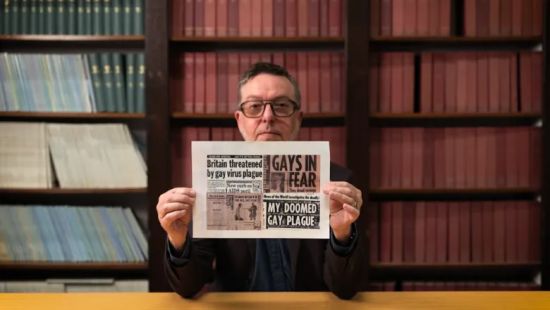
Richard recalls how there was a lot of fear and misinformation around HIV/AIDS at the beginning of the epidemic. An already frightening time to live through was made more difficult by stigma towards those disproportionately affected by the virus.
He worked as a HIV Care Manager in the 1990s and recalls how he would meet clients in hospital who would receive treatment under false names and how some community visits to patient’s homes would need to be done in secret.
Richard also volunteered with Gay Men Fighting Aids in 1993, a community-based organisation that campaigned for targeted HIV prevention work in the gay community: “There was a community [of activists] across London. Above pubs every evening there would be gay men meeting, planning actions, planning interventions, having fun. So, in the backdrop of something that was really difficult, we made an amazing community.”
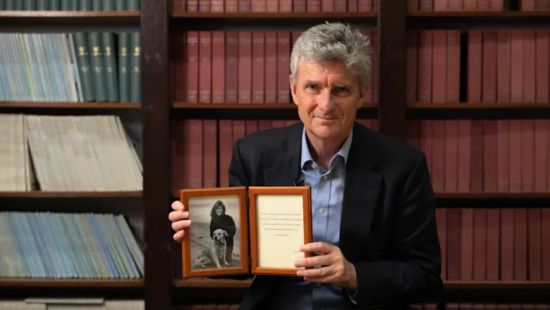
Community organisations had an indelible effect on the lives of people undergoing treatment for HIV. An example Richard shares in the film is a copy of a Living Will form from the Terrence Higgins Trust which popularised the document to enable patients to determine their own care towards the end of their life. This was especially important for same-sex couples, who had no protections under the law at that time.
“Simple counselling can greatly improve quality of life” - Professor Melanie Abas, Director of King’s Global Health Institute & Consultant Psychiatrist at Maudsley Hospital
Community is also at the heart of HIV prevention and care for Melanie. She recalls how during the early stages of the epidemic, activists and health professionals formed networks to share HIV treatment and care. In a pre-internet world, an example of this was Switchboard, founded in the 70s, which became one of the leading sources of information on HIV/AIDS in the 1980s.
Melanie is known for research which built conclusive evidence that a low-cost talking therapy, the ‘Friendship Bench’, originating from Zimbabwe, significantly reduces depression particularly in those living with HIV.
“If you sat on a bench and received simple counselling from a wise and non-judgemental, trained and supervised grandmother, this could dramatically improve your symptoms of stress, poor mental health. As a result, treatment in Zimbabwe and beyond has really moved into treating people’s mental health living with HIV in Africa.”
“The relationships I made then still help our research today” - Professor Michael Malim, Senior Vice Dean for Academic Strategy & Partnerships, Professor of Infectious Diseases
As a postdoctoral fellow at Duke University in the late 80s, Michael worked through the early stages of the epidemic as a virologist and has continued to research and publish on human pandemic viruses. Working at Duke, it became clear to him that HIV would develop into a significant global problem.
In the film, Michael references Elizabeth Glaser, an American woman who unknowingly contracted HIV through an infected blood transfusion in the 1980s and passed it on to her infant daughter. Sadly, they both later died.
Before her death, Elizabeth set up the Elizabeth Glaser Paediatric AIDS Foundation, which gave Michael a scholarship, enabling him to build a network of professional contacts who shared a passion for finding a cure to human epidemic viruses like HIV.
“I forged relationships and friendships during those retreats that have stayed with me forever. A paper we recently published on reduced pluripotent stem cells from HIV patients – the clinician that gave us all those samples I met at those retreats. In my case, Elisabeth’s legacy lives on in my lab and always will.”
HIV: Then, now and next
In the UK, the HIV/AIDS epidemic was at its worst from the late 1980s to the mid-1990s. Deaths from AIDS reached a peak in the UK in 1994. Although HIV can affect anyone, at the start of the epidemic, some groups such as gay and bisexual men were disproportionally affected.
Since the mid-1990s, deaths from AIDS have fallen dramatically, while HIV diagnoses initially fluctuated before declining in recent years. Today, over 100,000 people in the UK receive HIV care.
As well as the medication that can manage HIV, PrEP (pre-exposure prophylaxis) is an antiretroviral drug made available free on the NHS in 2020. It is taken by HIV-negative people to prevent them from getting HIV and is around 99% effective when taken correctly.
The Government’s HIV Action Plan for England aims to end new cases of HIV by 2030.
Melanie notes that the future of HIV could potentially be a positive one: “We have so many tools now, we have the medication to help people live a normal life expectancy, we have the ability for them to self-test in the community. We even have medications to prevent transmission.”
For Michael, the next problem is addressing transmission, which is his hope for the next 40 years: “The fact that 10,000 young people are being infected with HIV every week [globally], is staggering when you consider that there are very effective drugs available, and drug availability is not currently a problem.”
Palliative care is an effective, essential and cost-efficient service. But, as Richard notes, only 10% of people globally who would benefit from palliative care receive it. He hopes that in the next 40 years that everyone can access effective HIV treatments, that everyone receives the care they need until the end of life and an end to stigma.