March 13, 2026
Community-based integrated care for HIV, diabetes and hypertension safely expands access while easing pressure on health facilities in sub-Saharan Africa
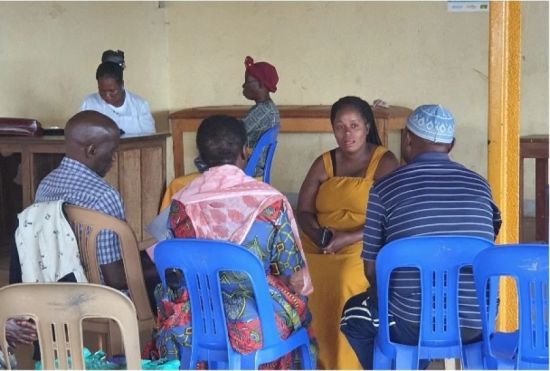
Entebbe, 13 March 2026 — Health systems in sub-Saharan Africa could safely expand access to chronic disease care by delivering integrated services in communities, according to a new multi-country clinical trial. The study found that community-based management of HIV, diabetes and hypertension achieved clinical outcomes comparable to facility-based care while improving access and convenience for patients.
The findings come from the ‘Integrated community-based versus integrated facility-based care for people living with HIV, diabetes or hypertension (INTE-COMM) trial’, a cluster-randomised study conducted in Uganda and Tanzania and published in The Lancet. The trial shows that integrated care delivered at the community level can maintain clinical outcomes comparable to facility-based integrated care for clinically stable patients with diabetes and/or hypertension, without compromising HIV care. These results build on earlier evidence from the INTE-AFRICA trial, which demonstrated that integrating HIV, diabetes, and hypertension services within health facilities maintained high-quality care while reducing service duplication and patient costs.
The INTE-COMM trial evaluated a model in which nurses and trained lay health workers delivered integrated care to adults living with HIV, diabetes, hypertension or a combination of these conditions at community locations such as churches, mosques, schools and local meeting points. In Tanzania, community health workers delivered the services, while in Uganda trained Village Health Teams supported care delivery. Outcomes were compared with those of patients receiving integrated facility-based care delivered by doctors, clinical officers, and nurses.
More than 1,800 participants were enrolled across 14 primary health facilities in Uganda and Tanzania, making INTE-COMM one of the largest trials globally to assess community delivery of integrated care for multiple chronic diseases.
The study found that clinical outcomes remained comparable between community-based and facility-based care, including blood pressure control among participants with hypertension, blood glucose outcomes among those living with diabetes, and HIV viral suppression among participants receiving HIV treatment. Retention in care was similarly high across both models.
These finding demonstrate that clinically stable patients with chronic conditions can safely receive integrated care closer to home while maintaining high standards of clinical management.
The results come at a critical time for many African countries facing a rapidly rising burden of non-communicable diseases alongside ongoing HIV care needs. Health systems are increasingly strained as growing numbers of patients require lifelong treatment and follow-up.
“The study findings are very exciting. Integrated community care is helpful to us. It eases the entire process in obtaining care in that it reduces the long waiting time spent at the facility, the high transport expenses incurred to move to the health facility. It also reduces stigma since all the 3 conditions are screened and managed jointly in the villages,” testified an INTE-COMM study participant.
“With patients who have multiple conditions being managed simultaneously from their communities, the model significantly eased our workload as healthcare providers. Even after the project ended, we continued to implement it. Patients have also found the integrated community care model so convenient and beneficial that many of those who previously received care at the facility continue to request to join the community care groups,” commented Ms Annet Nakibonge, Nurse, Namayumba Health Centre.
Researchers emphasise that community-based integrated care is designed to complement, not replace facility-based services, particularly for clinically stable patients. This allows health facilities to focus resources on individuals requiring more complex care.
“The INTE-COMM study reflects our strong collaboration with policymakers in Uganda and Tanzania to identify practical solutions for managing chronic diseases in the region,” said Prof. Moffat Nyirenda, Principal Investigator of the INTE-COMM study and Director of the MRC/UVRI and LSHTM Uganda Research Unit. “We are grateful to the Ministries of Health in both countries for their partnership and support in conducting this research.”
The findings provide important new evidence for policymakers exploring integrated chronic care models to extend service reach, improve continuity of care, and reduce pressure on overstretched health systems across sub-Saharan Africa.
“The Ministry of Health welcomes this important evidence from the INTE-COMM study. The findings will inform national programming and help decongest our health facilities, as many stable patients with non-communicable diseases will be managed in their communities. We will use the already existing outreach clinics which are currently focused primarily on HIV, TB and Immunization,” affirmed Dr. Gerald Mutungi, Non-Communicable Diseases Programme Manager at the Ministry of Health, Uganda.
This research was funded by the NIHR (Global Health Policy and Systems Research Programme grant NIHR131273) using UK international development funding from the UK Government to support global health research. The views expressed in this publication are those of the author(s) and not necessarily those of the NIHR or the UK government.
Notes to Editors
- INTE-COMM was a multi-country pragmatic cluster-randomised trial conducted in Uganda and Tanzania comparing integrated community-based and integrated facility-based care for HIV, diabetes, and hypertension.
- The INTE-COMM study was conducted through the RESPOND-AFRICA collaboration, an African-led multi-country partnership involving research institutions in Uganda and Tanzania working closely with international academic partners, national ministries of health, and civil society organisations, including the MRC/UVRI and LSHTM Uganda Research Unit (Uganda), the National Institute for Medical Research (Tanzania), Tanzania NCD Alliance, University College London (UK), the Liverpool School of Tropical Medicine (UK), Makerere University (Uganda), national Ministries of Health in Uganda and Tanzania, and multiple international academic and implementation partners.
- INTE-COMM follows the earlier INTE-AFRICA cluster-randomised trial (DOI: 10.1016/S0140-6736(23)01573-8) evaluating facility-based integrated care for HIV, diabetes, and hypertension in Uganda and Tanzania.
- The study enrolled 1,864 participants across 124 patient clusters spread evenly across the facility-based and community-based arm and followed for 12 months.
- The trial was conducted under routine health-service conditions using public-sector health workers.
- The manuscript DOI: 10.1016/S0140-6736(25)02641-8
Contact
Nancy Nandudu
Head of Communications and Engagement
nancy.nandudu@lshtm.ac.uk
MRC/UVRI and LSHTM Uganda Research Unit
Source: MRC/UVRI and LSHTM Uganda Research Unit https://www.lshtm.ac.uk/research/units/mrc-uganda/news/484931/community-based-integrated-care-hiv-diabetes-and-hypertension-safely-expands
"Reproduced with permission - The London School of Hygiene & Tropical Medicine | LSHTM"
The London School of Hygiene & Tropical Medicine | LSHTM
Back to…
Positively Positive - Living with HIV/AIDS:
HIV/AIDS News
For more HIV and AIDS News visit…
Positively Positive - Living with HIV/AIDS: HIV/AIDS News Archive
|