The United States is driving a public health emergency of international concern
Experts call for global collaboration to mitigate the harms of US policy changes
March 25, 2026
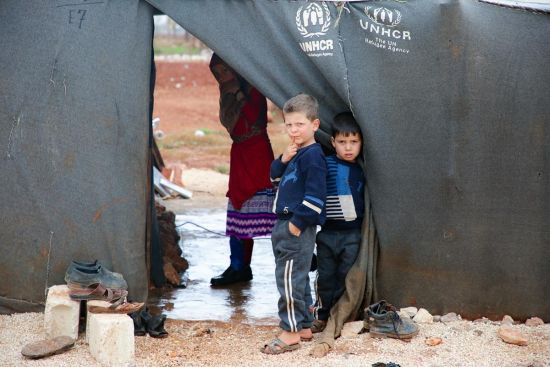
Salah Darwish (Unsplash)
The Trump administration’s decision to halt most US foreign aid and development work constitutes a public health emergency of international concern (PHEIC) under international law, argue experts in The BMJ today.
Matthew Herder and colleagues warn that these policies pose a grave threat to global health, risking multiple, international infectious disease outbreaks and potentially leading to millions of deaths and infections, particularly in low- and middle-income countries.
Key US actions detrimental to global health include withdrawing from the World Health Organization (WHO), reducing funding to combat diseases like HIV/AIDS, malaria, and tuberculosis in many of the world's poorest nations, altering the US childhood vaccination schedule, and reducing commitment to pandemic preparedness.
The authors note that while a PHEIC has never been declared due to the political actions of a single country, the overriding consideration is risk.
“International law makes clear that a public health emergency is defined by risk, not by waiting for outbreaks to spiral out of control so, by that standard, current US policies already meet the threshold to demand a decisive global response. US decisions to defund cornerstone global health programmes, step back from the WHO and link health financing to one‑on‑one deals with the Administration are not isolated moves; together they undermine the collective systems that protect populations from cross‑border health threats and risk giving rise to the next global health emergency,” says co-author Roojin Habibi, an Assistant Professor at the University of Ottawa’s Faculty of Law (Common Law Section) and Research Director of Global Health Law at the Global Strategy Lab.
"As the U.S. retreats from its global health commitments, other countries and multilateral institutions must step up – whether through sustained financing, stronger health systems, and the use of all available legal tools (such as compulsory licensing) – to prevent this political crisis from becoming the worst public health emergency in the world."
Given the recent US decisions have greatly amplified the risk of international disease spread, they argue this meets the criteria for a PHEIC under International Health Regulations (IHRs). The IHRs define a PHEIC as an "extraordinary event" that creates a "public health risk to other states through the international spread of disease."
Declaring a PHEIC can also mobilize funding and encourage the use of compulsory licensing of essential medicines to mitigate the harms stemming from US actions, they add.
Although they acknowledge that a PHEIC declaration could prompt further US backlash, the authors stress that hundreds of thousands of people have already died due to US actions since President Trump assumed office in early 2025, with more expected. As such, they say the international community, led by the WHO, must work collectively to protect global health.
“Whether or not WHO determines that the US’s actions amount to a PHEIC, we should not wait to call the U.S. president and his administration for what it is—the worst public health emergency in the world—and act accordingly,” they conclude.
A related feature describes how new US foreign aid rules create a "deadly triple tripwire" for recipient organisations by expanding existing abortion-related restrictions and banning funding for gender and diversity programs.
Sara Casey, an associate professor at the Columbia University Mailman School of Public Health, warns that the repercussions will be severe. "We’re going to see facilities shut or lose staff or services, which means we’re going to see things like maternal mortality and unsafe abortions increase," she says.
Notes for editors
Analysis: The United States is driving a public health emergency of international concern. DOI: 10.1136/bmj-2026-089474
Feature: Why the expanded global gag rule is a deadly triple tripwire for recipients of US foreign aid. DOI: 10.1136/bmj.s528
Media requests: media@uOttawa.ca
Contact
University of Ottawa
media@uOttawa.ca
Source: https://www.uottawa.ca/en/news-all/united-states-driving-public-health-emergency-international-concern
"Reproduced with permission - University of Ottawa"
University of Ottawa
Back to ...
Positively Positive - Living with HIV/AIDS:
HIV/AIDS News
For more HIV and AIDS News visit...
Positively Positive - Living with HIV/AIDS: HIV/AIDS News Archive
|